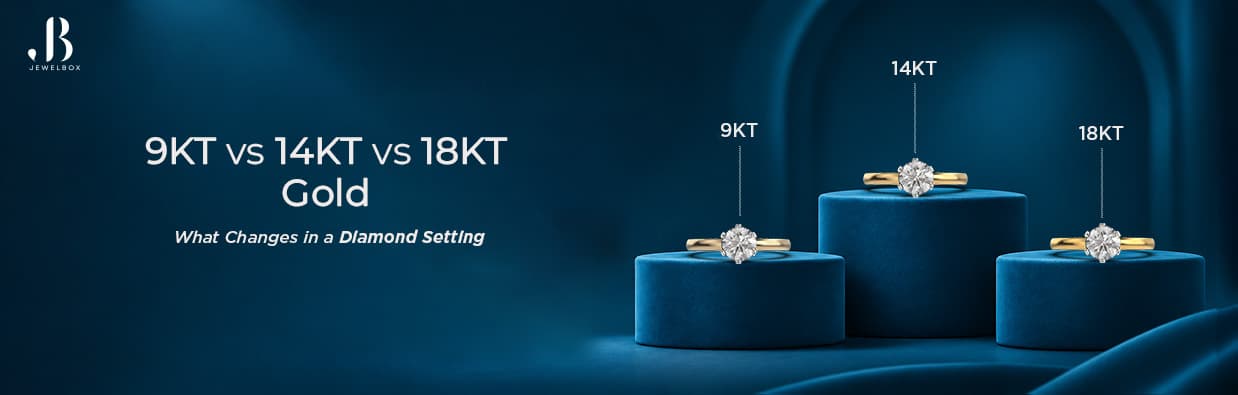
Gold purity changes how a diamond ring looks, feels and costs. 9KT gold jewellery is now a popular pick, since BIS added 9K gold to its hallmarking list from July 2025.
This blog compares 9KT, 14KT and 18KT gold for diamond settings. You will see what changes in purity, strength, colour and price, so you can choose with confidence.
What do 9KT, 14KT and 18KT mean?
KT stands for karat. Karat shows how much pure gold sits in an alloy, measured out of 24 parts. Pure gold is too soft for everyday wear, so jewellers mix it with other metals.
- 9KT: 37.5% gold, hallmark number 375
- 14KT: 58.5% gold, hallmark number 585
- 18KT: 75% gold, hallmark number 750
Gold coins and gold bullion use 24KT, which is too soft to hold a diamond safely. That is why jewellery uses lower karats.
9kt gold jewellery vs 18KT: How does the setting change?
Durability
More alloy usually means a harder metal. 9KT resists scratches and bends well, so it suits daily wear. 18KT is softer, but a skilled jeweller sets diamonds in it with care, and a quick polish brings back the shine.
Prongs hold the stone in place. Strong, well made prongs matter more than the karat number alone.
Colour
18KT shows a richer, warmer gold tone. 9KT can look slightly paler because it holds a smaller share of gold. Rose and white gold finishes hide this difference well.
Price difference
The price difference comes from gold content. 9KT costs the least, 14KT sits in the middle and 18KT costs the most.
In a diamond piece, the stone usually makes up most of the bill. On one Jewelbox solitaire stud listing, 18KT gold made up about 12 percent of the gold and diamond price. So the metal choice changes the total, but the diamond leads it. Check out our 9KT collection here.
Choosing the right gold purity for diamond jewellery
The right gold purity for diamond jewellery depends on how you plan to wear it. A simple way to decide 9KT vs 18KT gold is to match the metal to your routine.
- Pick 9KT for daily wear, gifting and a smaller budget.
- Pick 14KT for a balance of strength and gold content.
- Pick 18KT for bridal sets, heirloom rings and a rich gold colour.
The stone matters as much as the metal. A manufactured diamond, also called a lab grown diamond, has the same sparkle and hardness as a mined one. Pair it with the right gold and the ring looks lovely for years.
How to check the BIS hallmark?
A BIS hallmark confirms the purity written on the piece. It shows the BIS mark, the fineness number (375, 585 or 750) and a six digit HUID. You can verify the HUID on the BIS Care app.
Ask your jeweller to show these marks before you pay. Jewelbox pieces carry BIS hallmarked gold, so the details are easy to read.
Pick the gold that fits your life
9KT gives you strength and a friendly price. 14KT sits in the middle. 18KT offers the richest look. Each works well with a diamond when the setting is built with care.
Visit your nearest Jewelbox store to compare these finishes side by side, or browse online and shortlist your favourites first.Explore BIS hallmarked 24KT gold coins at Jewelbox, made for gifting and long term saving.
FAQs
1. Is 9KT gold real gold?
Yes. It contains 37.5% pure gold, and the BIS hallmark reads 375.
2. Is 9KT gold hallmarked in India?
Yes. BIS added 9K gold to its hallmarking framework from July 2025.
3. Can I set a diamond in 9KT gold?
Yes. Many jewellers do. Check that the prongs are strong and well finished.
4. Which is better for daily wear, 9KT or 18KT?
9KT is harder and costs less, so it suits daily wear. 18KT has a richer colour and suits special pieces.
5. Why does 18KT cost more?
It holds 75% gold, while 9KT holds 37.5%. More gold raises the price.
6. What karat do gold coins and gold bullion use?
They use 24KT gold, which is the purest form.